
Trumbash / Trombash Research Appendix

Visual Reference Gallery
The Trumbash is fortunate because several museums have public images available.
Reference 1: Brooklyn Museum Trumbash (Ivory Handle)
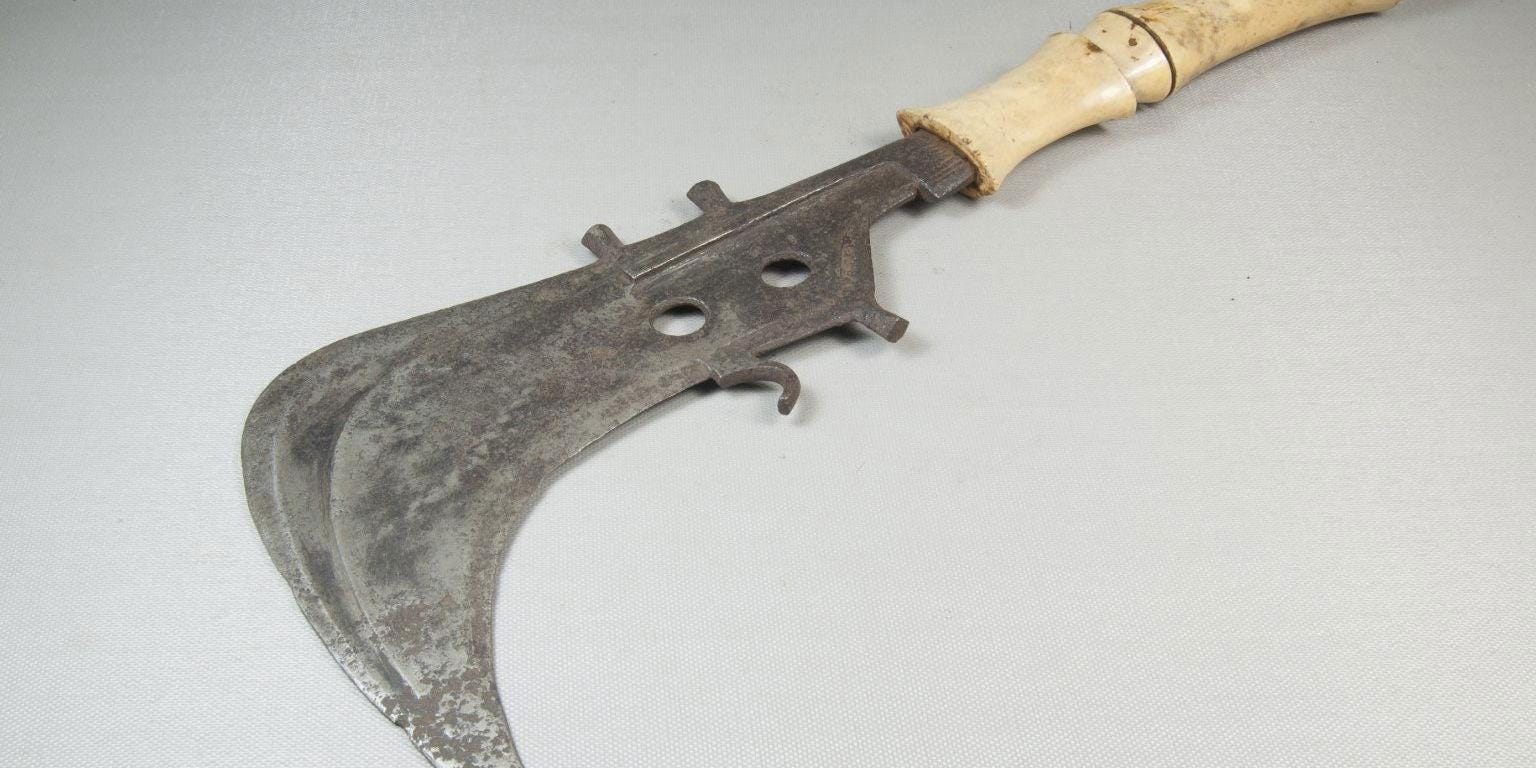
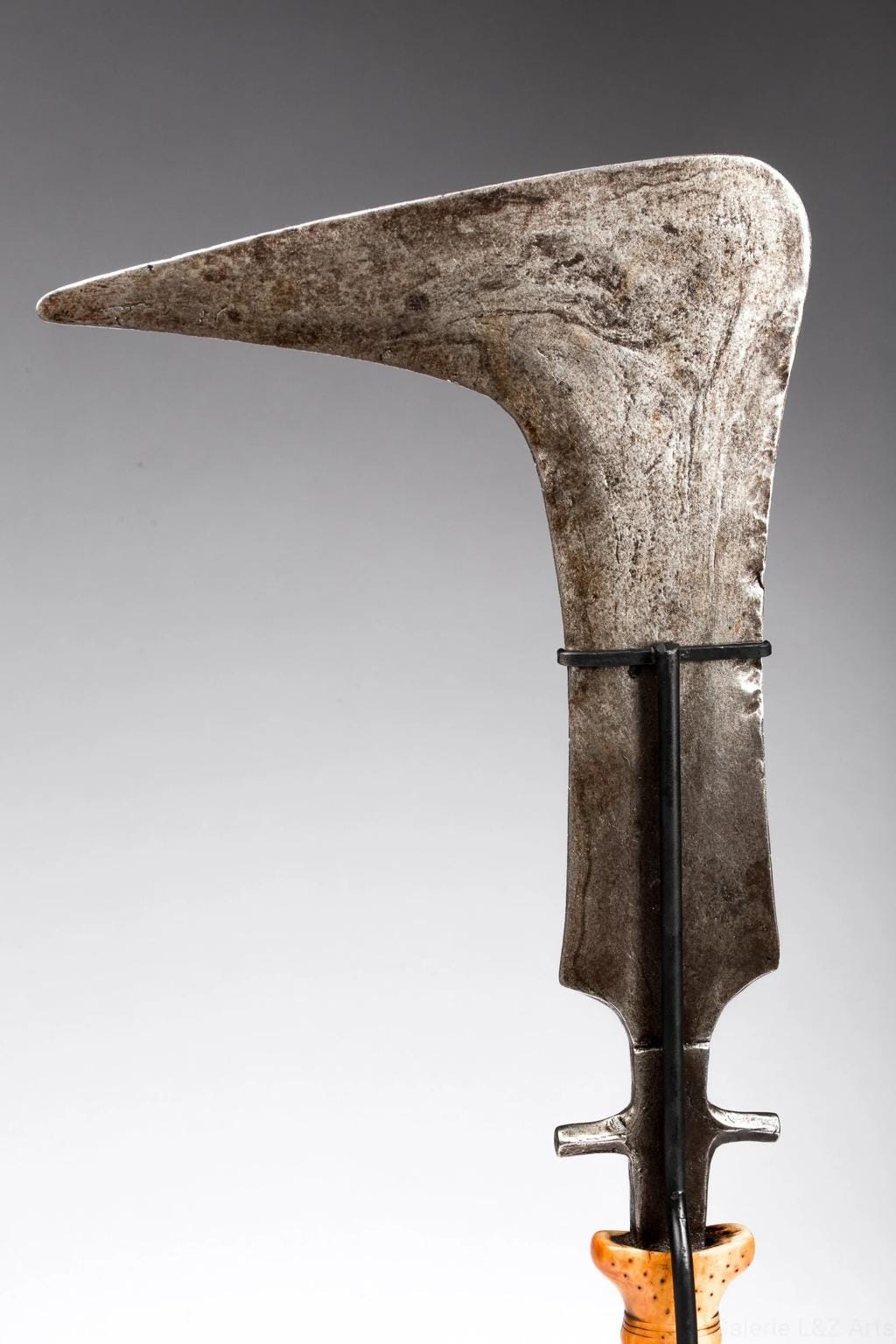
Collection: Brooklyn Museum
Date: Late 19th Century
Materials: Iron, ivory
Dimensions: 15.25 inches (38.7 cm) long
One of the finest published examples, illustrating the prestige version of the weapon with an ivory handle rather than a standard wooden grip.
Reference 2: Cleveland Museum of Art Trumbash
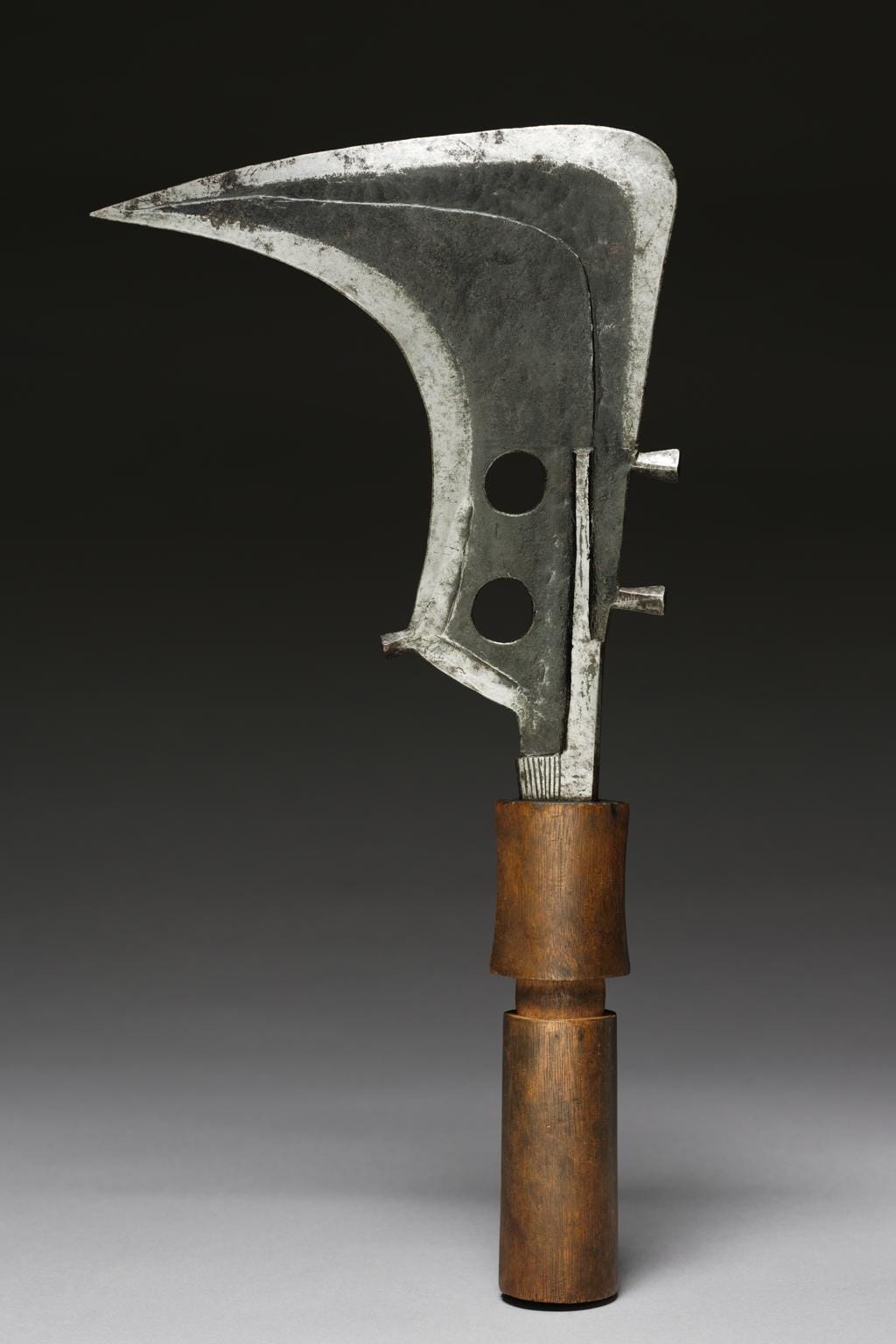
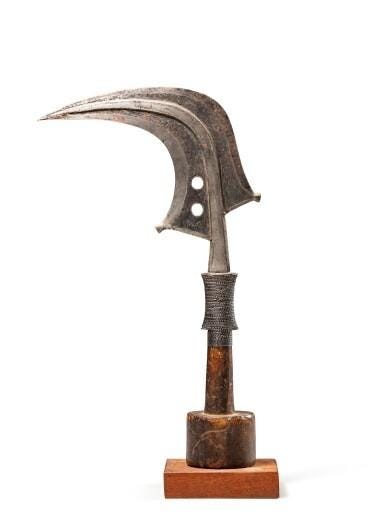
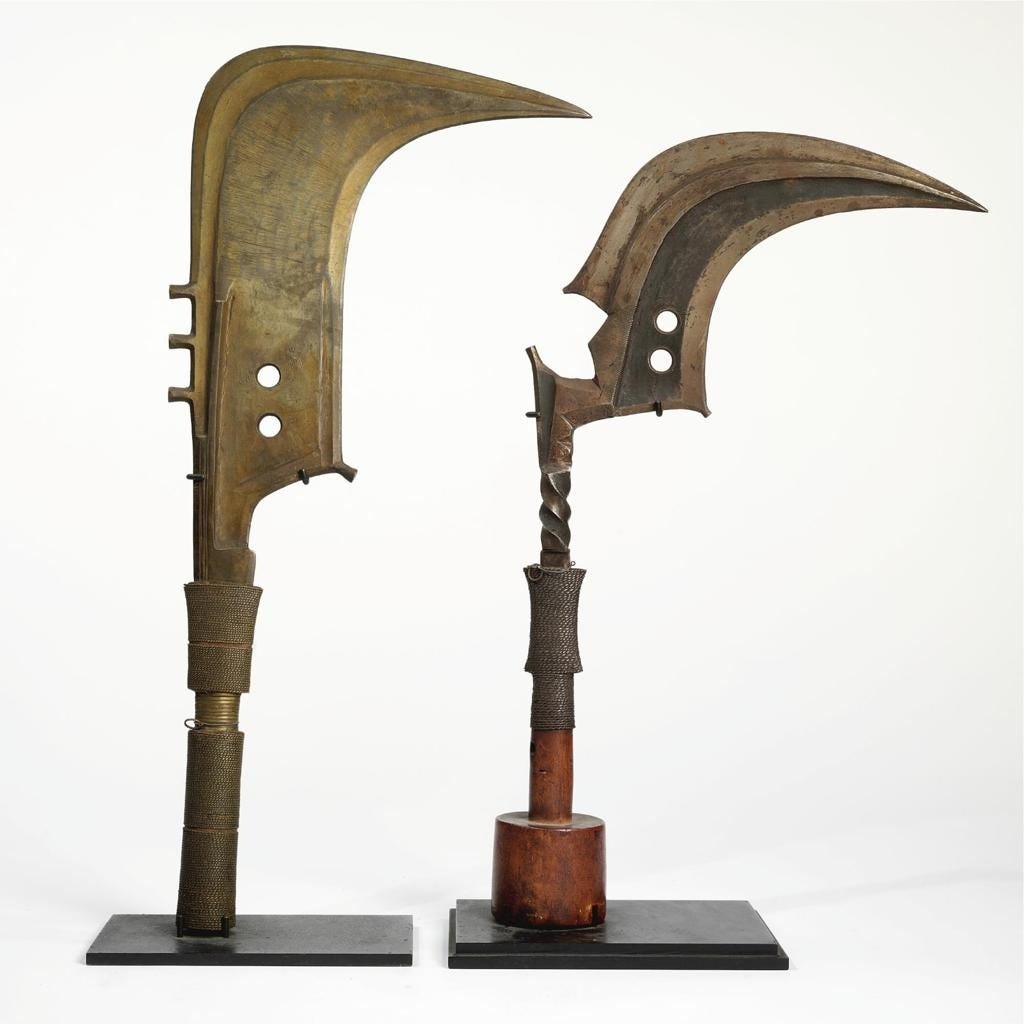
Collection: Cleveland Museum of Art
Date: 1800s
Materials: Iron and wood
Dimensions: 20 cm (7.9 inches)
This specimen clearly shows the perforations and decorative iron projections common on many Trumbash forms.
Reference 3: Mangbetu Trumbash (Bët-bi Collection)
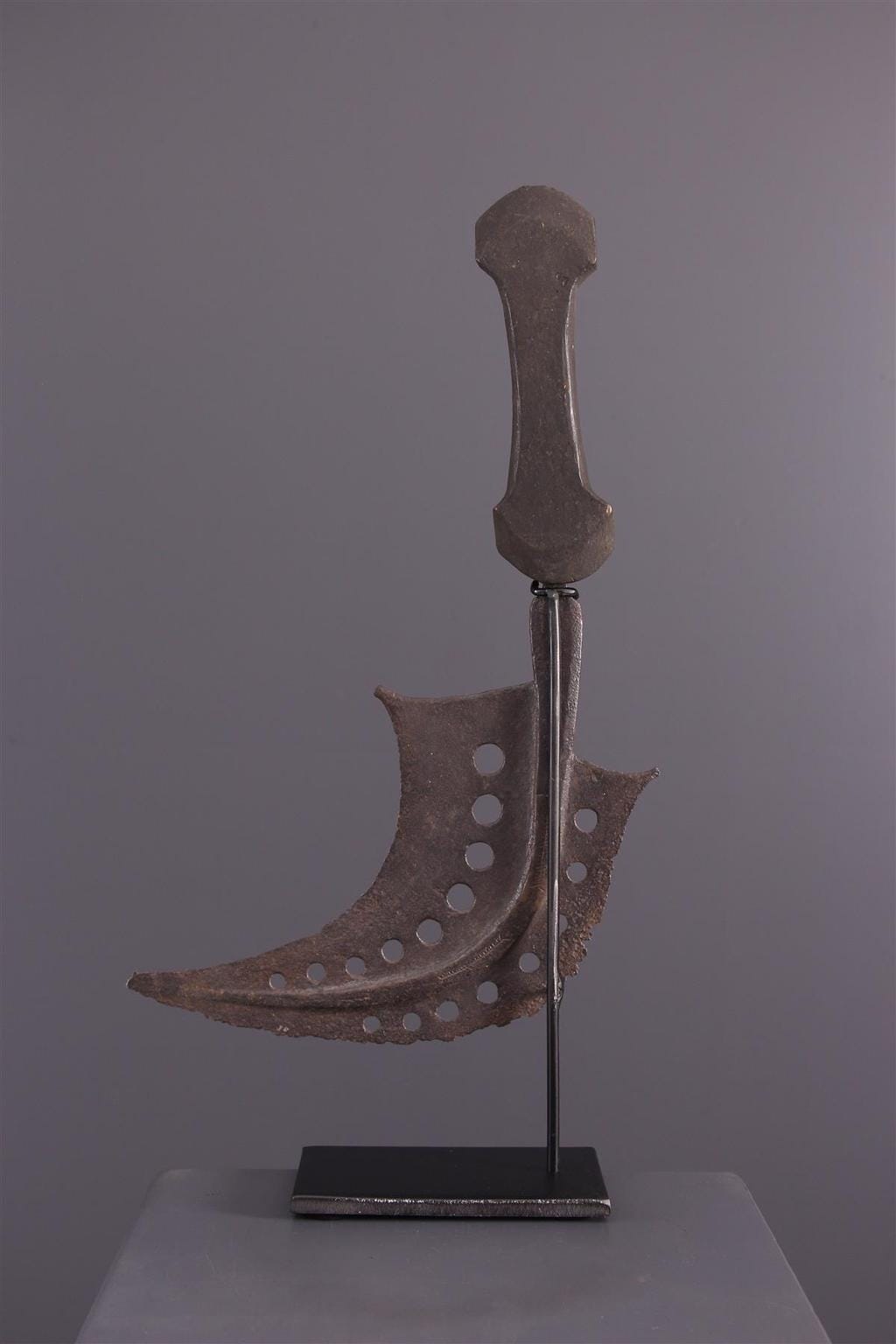
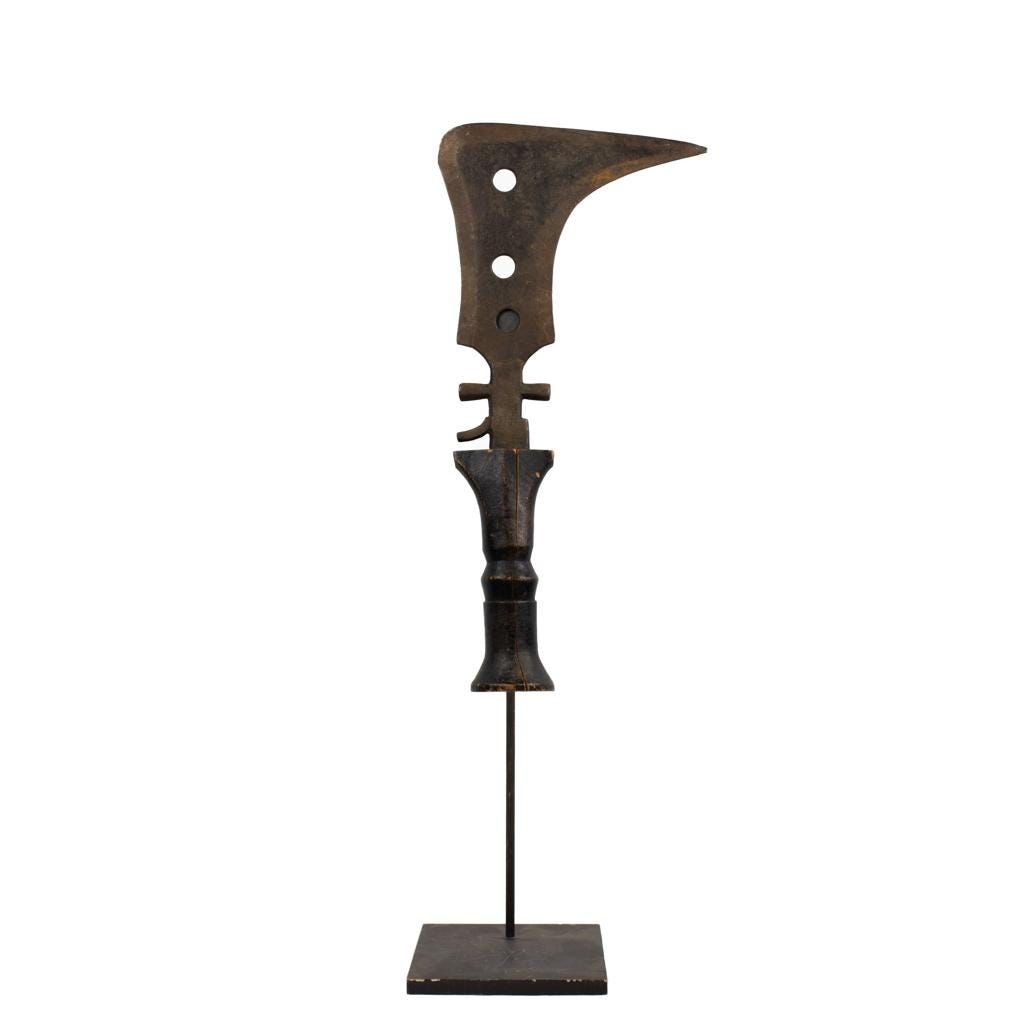
Date: c. 1940
Dimensions: 14.75 inches (37.5 cm)
An excellent example of the curved Mangbetu style sometimes classified as an Emambele variant.
Reference 4: Wikimedia Commons Specimen
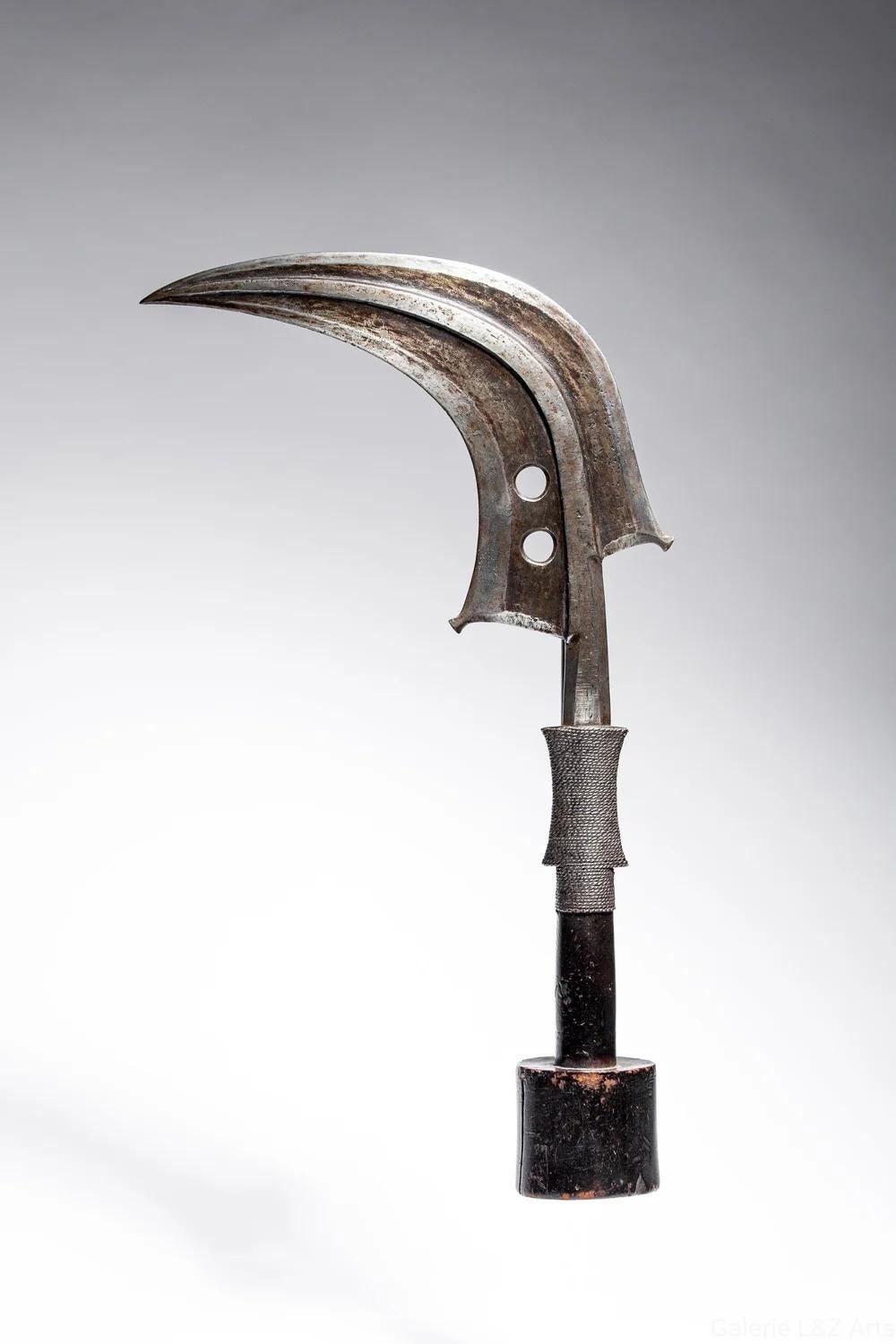
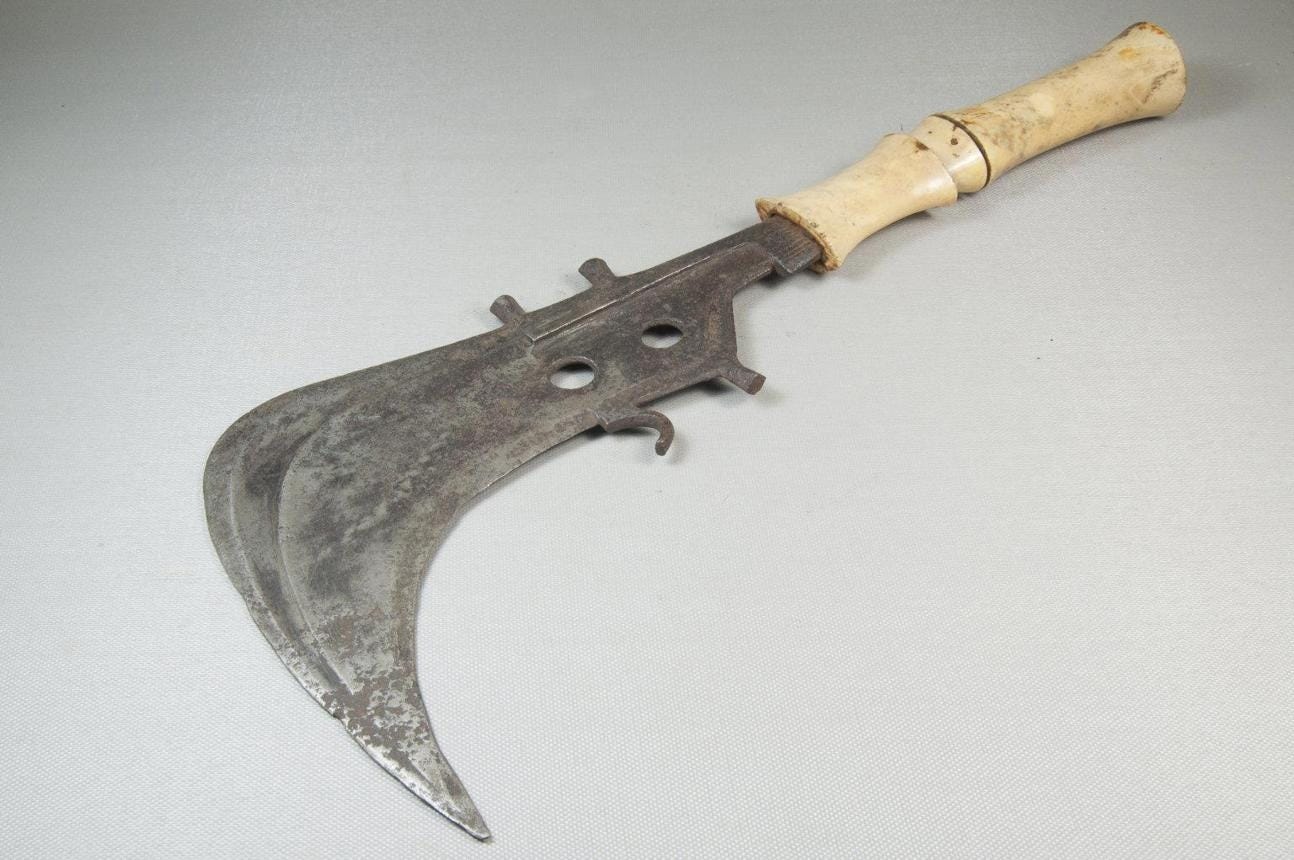
A useful study specimen showing the classic sickle-shaped blade profile associated with the weapon.
Reference 5: Anthropomorphic Handle Variant
Some prestige examples terminate in stylized human heads, demonstrating that the weapon could function as elite regalia as much as a practical weapon.
Weapon Data Sheet
Primary Name
Trumbash
Alternate Names
Trombash, Trumbasch, Emambele, Dupa (regional usage varies)
Region
Northeastern Democratic Republic of the Congo
Associated Peoples
Mangbetu, Azande, Boa, Bandia, Budu, Barambo, and neighboring groups
Date Range
At least 19th century through early 20th century
Typical Length
35–40 cm (14–16 inches)
Materials
Iron blade, wood, ivory, bone
Weapon Type
Sickle knife / prestige knife
Primary Function
Status symbol, ceremonial weapon
Secondary Functions
Utility knife, exchange object, occasional throwing weapon
Carry Method
Belt or hand carried
The average surviving specimen is approximately 40 cm long, though examples range from smaller utility forms to elaborate prestige versions.
Museum Collections
Brooklyn Museum
Object: Knife, Ivory Handle (Trumbash)
Accession Number: 22.457
Culture: Mangbetu
Date: Late 19th Century
Materials: Iron and ivory
Cleveland Museum of Art
Object: Sickle Knife (Trumbash)
Accession Number: 1929.365
Culture: Mangbetu
Date: 1800s
Materials: Iron and wood
Royal Museum for Central Africa
Multiple Trumbash examples appear in the museum’s African arms and armor holdings and are frequently reproduced in scholarly studies of Central African weapons.
Historical Notes
One of the most persistent misconceptions about the Trumbash is that every example was primarily a throwing weapon. Modern scholarship increasingly suggests that many surviving examples functioned primarily as prestige items, ceremonial blades, or forms of symbolic wealth. Simpler examples could certainly be used as weapons, but many elaborate specimens were likely carried as indicators of status.
The German explorer Georg Schweinfurth recorded seeing a Mangbetu ruler carrying a copper-bladed Trumbash in 1870. Such a weapon would have had little battlefield utility but considerable prestige value.
Several scholars also note that the perforations found in many blades probably held copper inserts or decorative elements indicating rank, wealth, or military achievement.
The Trumbash occupies an important position in the broader family of Central African sickle weapons, which includes several related forms used by neighboring peoples.
Notable Variants
Royal Prestige Trumbash
Often fitted with ivory handles, anthropomorphic pommels, or copper blades.
Associated with chiefs, nobles, and elite figures.
Utility Trumbash
Simpler iron construction.
Likely used for daily work and practical tasks in addition to self-defense.
Emambele Variant
A curved Mangbetu form featuring blade perforations and decorative elements.
Often identified as a specific Trumbash subtype.
Anthropomorphic Trumbash
Handle terminates in a stylized human head.
Probably associated with status and ceremonial display.
Further Reading
Books
Werner Fischer & Manfred Zirngibl, African Weapons: Knives, Daggers, Swords, Axes, Throwing Knives.
Jan Elsen, De fer et de fierté: Armes blanches d’Afrique noire du Musée Barbier-Mueller.
Tristan Arbousse Bastide, Traditional Weapons of Africa.
Manfred Zirngibl, Rare African Short Weapons.
Academic Articles
Pat R. McNaughton, “The Throwing Knife in African History.”
Enid Schildkraut, “The Spectacle of Africa through the Lens of Herbert Lang.”