
The Sacred Double
Twins in Africa, the African Diaspora, and Black Fantasy

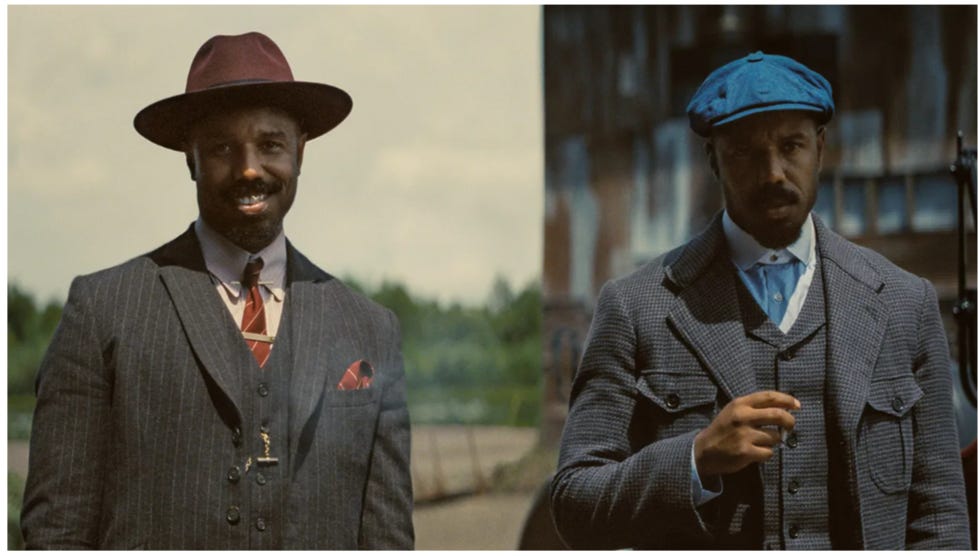
Stack and Smoke in the movie Sinners
The Son of a Twin
One of the most fascinating discoveries I have made while studying African and African Diasporic folklore is that twins occupy a place unlike almost anywhere else in the world.
Growing up in America, many of us encounter twins as a biological curiosity. We hear stories about twins finishing one another’s sentences, sharing thoughts, or possessing some mysterious connection. Popular culture often treats twins as mirrors, opposites, or narrative devices. One twin is portrayed as good while the other is portrayed as evil. One survives while the other dies. One represents light while the other represents darkness.
My understanding of twins has always been more personal because my mother was a twin. That fact shaped the stories I heard growing up and influenced how I understood family relationships. Within my family, I carry an appellation that identifies me through that connection. I am known as the “son of the twins.” That title reflects an understanding that the birth of twins creates relationships that extend beyond the twins themselves. The significance of twinhood reaches into future generations and shapes how family members understand themselves and one another.
My family is not unique in this regard. Across many African cultures, there are special names, titles, and appellations associated not only with twins themselves but also with siblings born before them, siblings born after them, and even the descendants who follow them. Among the Yoruba of Nigeria and Benin, twins are known as Taiwo and Kehinde, and there are additional names associated with children born after the twins. These naming traditions recognize that the birth of twins changes the spiritual and social structure of a family. Twinhood becomes a lineage within a lineage, creating a network of relationships that extends far beyond the two children themselves. The fact that I am known as the “son of the twins” reminds me that in many African-derived traditions identity is not solely individual. Identity is relational, communal, and ancestral.
Understanding twins through this lens helps explain why they occupy such an important place throughout Africa and the African Diaspora. In many traditions, twins are not simply unusual children. Their birth is understood as an event that reveals something important about the relationship between family, community, ancestry, and the spirit world.
More Than Siblings: The Sacred Status of Twins in Africa
Many European myths contain what scholars call Divine Twins. Castor and Pollux, Romulus and Remus, and numerous horse-riding twin heroes found throughout Indo-European traditions serve as warriors, kings, founders, and protectors. In these traditions, twins become important because of what they accomplish. Their stories focus on heroic deeds, warfare, kingship, exploration, sacrifice, and the founding of civilizations. The twins are exceptional figures whose actions elevate them above ordinary people.
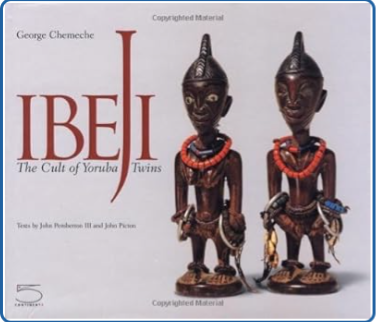
African traditions often begin from a very different perspective. In many African cultures, twins are important not because of what they accomplish but because of what they are. Among the Yoruba, who possess one of the highest twin birth rates in the world, twins are known as Ìbejì and are understood to carry extraordinary spiritual force known as àṣẹ. They are regarded as blessings, signs, and evidence that the unseen world has touched the visible world. Their birth itself is spiritually significant.
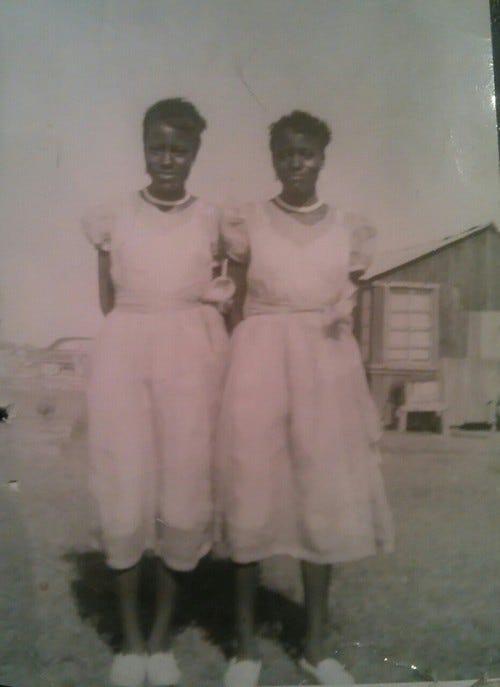
My aunt and my mother
The spiritual importance of twins is reflected in the traditions that surround them. If one twin dies, families may commission an ere ibeji figure, a carved representation of the deceased twin. The figure is fed, washed, dressed, and cared for because the relationship between the twins continues even after death. This practice expresses a profound belief that death may separate bodies, but it does not necessarily separate twins. The spiritual relationship between them continues beyond physical death.
Similar ideas can be found throughout West and Central Africa. Twin births were frequently understood as events that affected entire communities. Twins could be viewed as connected to ancestors, spirits, water beings, or divine powers. Their existence challenged ordinary assumptions about individuality because twins seemed to embody a mystery. Many African traditions sought to answer the question of how two people could be so deeply connected while remaining distinct individuals. The answer was often found in spiritual concepts that emphasized kinship, ancestry, and sacred power.
The result was a worldview in which twins were not merely biological siblings. They were sacred beings whose existence revealed important truths about life, family, community, and the spiritual universe.
Twinhood Beyond the Middle Passage
When millions of Africans were carried into slavery, beliefs about twins crossed the Atlantic as well. These traditions did not always survive intact, and they often adapted to new environments and circumstances. Nevertheless, they endured and continued to shape the spiritual imagination of Black communities throughout the Americas.
In Haiti, the sacred twins became known as the Marasa. Within Vodou theology, the Marasa are paradoxical beings who are simultaneously one and two. They are often described as older than the lwa while also being their children. They embody the mystery that something can be multiple and unified at the same time. The Marasa preserve an important African understanding that twinhood reveals truths about the nature of reality itself.
Throughout the Americas, traces of African twin traditions persisted in Black communities. In Hoodoo and Black Southern folklore, twins were frequently regarded as spiritually gifted. Stories circulated about twins sharing dreams, sensing danger from great distances, healing through touch, or possessing unusual luck and intuition. Many Black families possess stories about twins that sound almost supernatural. Some families tell stories about one twin knowing when the other was hurt, while others describe twins who shared dreams or seemed able to communicate without speaking.
Whether one interprets these stories literally or symbolically, they reveal something important. Black America never completely abandoned the idea that twins were special. The survival of these beliefs demonstrates how African ways of understanding family and spirituality continued to endure despite centuries of displacement, oppression, and cultural disruption.
The Sacred Double in Black Storytelling
The persistence of twin traditions helps explain why twins continue to appear in Black literature, theater, film, and folklore. Contemporary Black storytelling often treats twins as figures who embody shared destiny, collective memory, and spiritual connection. Recent examples include Smoke and Stack in Sinners and the twin sisters at the center of Is God Is.
Smoke and Stack in Sinners
In Sinners, Smoke and Stack function as more than brothers. They operate as reflections of one another while carrying shared histories, traumas, ambitions, and destinies. Their bond feels larger than an ordinary sibling relationship. Even when they make different choices, they remain connected through something deeper than blood. Although the film does not explicitly present them through the lens of Yoruba spirituality or Hoodoo folklore, their relationship resonates with longstanding African Diasporic ideas about twinhood as a condition that transcends ordinary individuality.
The Sisters of Is God Is
In Is God Is, twin sisters undertake a journey shaped by violence, memory, revenge, and family obligation. Their identities remain intertwined throughout the story, raising questions about whether twins are truly separate individuals or manifestations of a shared destiny. The play explores themes that would be familiar within many African and African Diasporic traditions because the sisters move through the world as distinct people while remaining connected through a bond that cannot easily be broken.
Both Sinners and Is God Is participate in a long Black storytelling tradition that understands twins as spiritually significant figures. In these stories, the twin represents a bridge between worlds, a mystery, and a reminder that identity is never entirely singular.
Reimagining Twins in Black Fantasy
These traditions offer powerful possibilities for fantasy creators. Fantasy literature has inherited much of its symbolic vocabulary from European mythology, and as a result many fantasy twins resemble Castor and Pollux or Romulus and Remus. They are often princes, warriors, rivals, or chosen heroes whose importance emerges through their actions.
African traditions offer a different set of possibilities because they place the sacred nature of twinhood at the center of the story. One might imagine a fantasy world in which twins are born carrying shared souls, kingdoms celebrate twin births through sacred festivals, and magical traditions recognize twinhood as a source of supernatural power. A society could believe that twins are living bridges between the world of the ancestors and the world of the living. Twin-born priests might communicate across great distances, while twin warriors might share wounds, dreams, or memories. Entire systems of magic could be built around the spiritual bond between twins.
These possibilities emerge because African traditions approach twins from a fundamentally different perspective. Twins are not extraordinary because they become heroes. Rather, they are extraordinary before they accomplish anything at all. Their significance is rooted in their existence rather than their achievements.
Sacred Twins at the Gaming Table
For tabletop role-playing games, twin traditions open remarkable design space. Most fantasy games focus heavily on individual heroes, whereas African-inspired twin traditions encourage us to think about relationships themselves as sources of power.
A role-playing setting might include twin-born characters who possess abilities unavailable to anyone else. Such characters might share dreams across great distances, cast rituals together, sense danger to one another, exchange wounds and burdens, or call upon ancestral spirits jointly. Entire organizations could be built around twins, including twin oracles, twin warrior societies, twin spirit mediums, and twin monster hunters.
A Hoodoo-inspired fantasy setting might portray twins as uniquely gifted in ancestor work because they already understand how one spirit can be reflected through multiple bodies. Likewise, a kingdom inspired by Yoruba traditions might regard the birth of twins as a sign that the ancestors are speaking directly to the living. Such ideas allow Black fantasy creators and game designers to move beyond familiar European archetypes while remaining rooted in authentic cultural histories and worldviews.
The Power of Two
The most compelling aspect of twin traditions may be the way they challenge one of modern Western culture’s deepest assumptions: the idea that every person exists as a completely isolated individual. African and African Diasporic traditions often suggest something very different. These traditions emphasize that we are connected to our families, our ancestors, our communities, and those who came before us. Twins make that truth visible, and as the son of a twin, I find that lesson especially meaningful.
The appellation I carry, “son of the twins,” reminds me that identity is not simply an individual matter. Identity emerges through relationships. It is shaped by kinship, memory, ancestry, and obligation. Whether we encounter Ìbejì shrines in Nigeria, Marasa ceremonies in Haiti, Hoodoo folklore in Mississippi, or contemporary works such as Sinners and Is God Is, the underlying message remains remarkably consistent. Twins remind us that identity is never entirely singular and that we are always part of something larger than ourselves.
In a world that often celebrates the lone hero, that may be the most powerful kind of magic there is.