
Beyond the King’s Son
Using Matrilineal Monarchies in Fantasy Worldbuilding

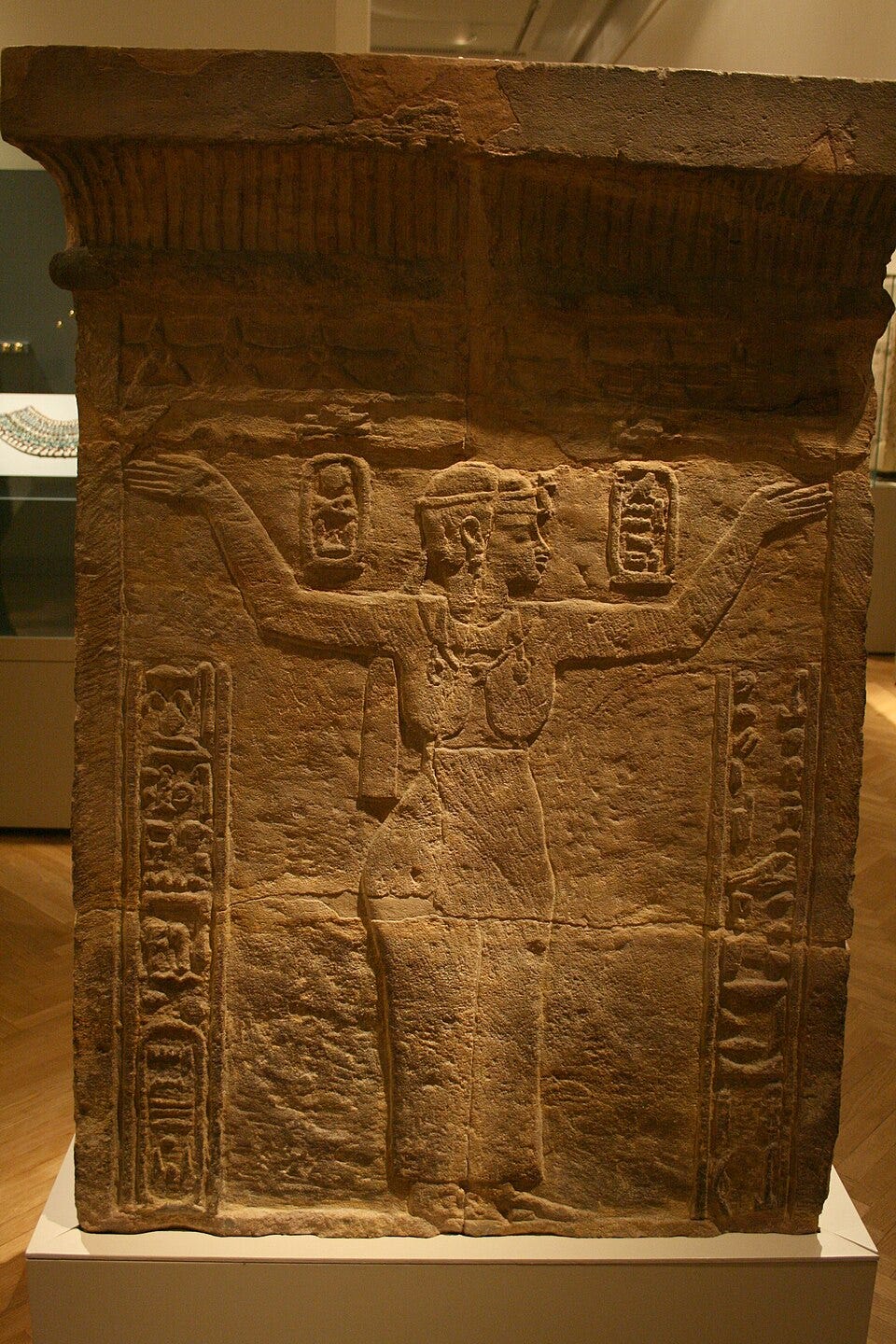
Kentake Amanitore of Meroe (Kush). Contemporary of Nero
Fantasy roleplaying games love monarchies. From tabletop campaigns to novels, kingdoms are filled with kings, princes, dukes, and noble houses whose power passes from father to son. Even when a setting includes powerful queens, the underlying assumptions often remain the same. Dynasties are patrilineal. Family names descend through men. Inheritance flows from father to son. Political legitimacy is tied to the male line.
The result is that many fantasy kingdoms end up feeling remarkably similar to one another. Different names may be used and different coats of arms may fly above castle walls, but the political structures beneath them often share the same assumptions. One way to create a kingdom that feels immediately distinct while drawing from real historical precedents is to introduce a matrilineal monarchy.
A matrilineal monarchy is not a matriarchy. Men may still serve as kings, generals, judges, and nobles. The difference is that legitimacy, inheritance, and dynastic identity flow through women rather than men. Instead of a king’s son becoming the heir, the heir may be his sister’s son. Instead of tracing noble bloodlines through fathers, lineage is measured through mothers. This single change can transform the politics, social relationships, and roleplaying opportunities of an entire setting.
Historical Inspirations
Contrary to popular assumptions, matrilineal political systems are not imaginary inventions or rare curiosities. They have existed throughout history in many different forms and offer game masters a rich collection of real-world examples from which to draw inspiration.
Among the Akan peoples of West Africa, including the Ashanti, succession often passed through the mother’s lineage. A king’s heir was frequently his sister’s son rather than his own child. Royal women played critical roles in maintaining dynastic continuity, and queen mothers often exercised tremendous political influence. The position of queen mother was not merely ceremonial. In many cases she participated in selecting rulers, advising leaders, and preserving the legitimacy of the royal line.
In the Kingdom of Kongo, eligibility for rulership was tied to membership in royal lineages that were frequently traced through women. Political legitimacy depended on belonging to the correct kinship group rather than simply being the biological son of the previous ruler. This created political dynamics that often differed dramatically from those found in European monarchies.
The royal house of Travancore in southern India followed the marumakkathayam system, in which succession passed through the maternal line. Kings were often succeeded by nephews rather than sons, and royal women became essential to the survival of the dynasty. The continuity of the kingdom depended upon preserving the maternal line that connected future rulers to the royal house.
The Kingdom of Kush and later Meroë in Nubia provide another fascinating example. Although scholars continue to debate the exact mechanisms of succession, royal women clearly occupied positions of extraordinary significance. Powerful queen mothers and Kandakes influenced politics, diplomacy, and warfare. Many historians believe that maternal descent played an important role in establishing royal legitimacy, making these kingdoms especially valuable sources of inspiration for fantasy settings.
Even Ancient Egypt, while not strictly matrilineal, often placed enormous importance on royal women. A prince’s claim to the throne was strengthened considerably if his mother belonged to the royal line. The blood of queens and princesses carried immense political significance, demonstrating that even societies that were not fully matrilineal sometimes recognized the importance of maternal legitimacy.
These examples remind us that patrilineal monarchy is not the only way human societies have organized power and succession.
Reimagining the Royal Family
The most immediate impact of a matrilineal monarchy is the transformation of the royal family itself. In a typical fantasy kingdom, the king worries about producing sons. His eldest son becomes crown prince. Younger sons compete for influence while daughters are married away for political alliances.
In a matrilineal monarchy, however, the king’s children may not inherit at all. Imagine the shock this creates for players accustomed to conventional fantasy assumptions. The king’s beloved son may be a celebrated warrior, a gifted diplomat, or a brilliant scholar, yet he cannot inherit because succession passes through the king’s sister’s children. Suddenly the most politically important young noble in the kingdom is not the crown prince but the king’s nephew.
This creates rich opportunities for intrigue and drama, as a king may devote decades to strengthening the realm only to realize that his successor belongs to another household. Ambitious fathers may seek ways to elevate their own children despite longstanding tradition, while rival branches of the royal clan compete to prove that their maternal lineage is the most legitimate. As a result, the entire shape of court politics changes, producing conflicts and alliances that feel markedly different from those found in most fantasy settings.
The Power of Royal Women
One of the most interesting consequences of a matrilineal monarchy is that women become political anchors even when men occupy the throne. In many fantasy settings, queens are treated as supporting characters whose primary role is to produce heirs, arrange marriages, and occasionally act as regents. In a matrilineal system, royal women become the foundation upon which legitimacy itself rests.
The king’s sister may be more politically important than his wife. The queen mother may possess authority that rivals or exceeds that of senior ministers. A princess may become the most sought-after political ally in the kingdom because future rulers will descend from her line. This does not mean women automatically rule, nor does it require transforming the setting into a matriarchy. Instead, it means that everyone understands where legitimacy comes from and organizes political behavior accordingly.
For roleplaying purposes, this creates a fascinating dynamic. Players cannot simply identify the person sitting on the throne and assume they have found the center of power. The true power may reside in a royal aunt who rarely attends court, a queen mother who controls key alliances, or a princess whose future children will determine the next generation of rulers. Such relationships encourage players to engage with family networks, social obligations, and dynastic politics in ways that many fantasy settings rarely explore.
New Sources of Conflict
Good worldbuilding creates conflict, and matrilineal succession introduces forms of conflict that are rarely seen in fantasy campaigns. A king’s son may resent his exclusion from the line of succession. Noble houses may attempt to marry daughters into the royal lineage to secure future influence. Foreign kingdoms may struggle to understand succession rules that differ from their own traditions.
Consider a diplomatic crisis in which a neighboring prince marries a royal princess and assumes that his future son will inherit the throne. Local customs, however, dictate that succession belongs to the children of another woman in the royal clan. What begins as a marriage alliance could evolve into a succession war that engulfs multiple kingdoms.
Religious disputes may emerge as well. Priests could argue over whether sacred blood resides in women, men, or both. Reformers might attempt to replace matrilineal customs with patrilineal inheritance, while traditionalists view such efforts as an attack on the kingdom’s identity and sacred traditions. Every one of these tensions provides fuel for adventures because the conflicts arise naturally from the structure of society itself rather than requiring external threats or invading armies.
Moving Beyond Medieval Europe
Many fantasy worlds borrow heavily from medieval Europe, often without realizing how many assumptions come along with that choice. Matrilineal monarchies offer an opportunity to broaden the range of inspirations used in worldbuilding while creating societies that feel genuinely different from the standard fantasy kingdom.
A kingdom influenced by Akan succession customs will not simply look different from a typical fantasy realm. It will think differently. People will understand family, inheritance, and power through a different cultural lens. Characters will ask different questions and make different assumptions about status and authority.
Instead of wondering who a person’s father was, they may ask about their mother’s clan. Instead of tracing ancestry through a line of kings, historians may focus on a line of queen mothers. Instead of celebrating the birth of a prince, the kingdom may pay closer attention to the daughters of the royal house and the alliances they create. These seemingly small changes make a setting feel lived in and culturally distinct because they influence everyday behavior rather than existing solely as background lore.
Adventure Hooks for a Matrilineal Kingdom
One of the greatest strengths of a matrilineal monarchy from a game master’s perspective is that the structure naturally generates compelling stories. Political uncertainty, dynastic competition, and competing interpretations of legitimacy all create opportunities for memorable adventures.
The king’s nephew might disappear shortly before his coronation, forcing the player characters to uncover whether he was kidnapped, assassinated, or chose to flee his responsibilities. A foreign empire might support the king’s son as a rival claimant to the throne, triggering a civil war based on competing visions of succession. The last surviving woman of the royal lineage may have vanished into exile decades ago, leaving adventurers to search distant lands for the person whose bloodline could restore stability to the kingdom.
An ancient prophecy might declare that only a descendant of a forgotten queen can unite the realm during a coming catastrophe. A powerful queen mother may secretly govern the kingdom while a weak king occupies the throne. A noble family might discover evidence that they descend from an overlooked branch of the royal maternal line and suddenly find themselves at the center of a dangerous struggle for power. Each of these stories emerges naturally from the structure of the society rather than being imposed from outside, allowing the world itself to generate adventure.
Expanding the Possibilities of Fantasy
Fantasy roleplaying thrives on imagination, yet many campaign settings rely on remarkably familiar political systems. Incorporating a matrilineal monarchy offers a simple but powerful way to create something different while drawing inspiration from real historical societies.
Historical examples from the Akan kingdoms, Kongo, Travancore, Kush, Meroë, and even aspects of Ancient Egypt demonstrate that societies have organized succession and legitimacy in many ways. By drawing inspiration from these traditions, game masters can create kingdoms that feel fresh, believable, and deeply rooted in human history.
More importantly, matrilineal monarchies generate stories. They create unusual family dynamics, unexpected political alliances, and succession crises that challenge player assumptions. They encourage players to pay attention to relationships, kinship networks, and cultural traditions rather than focusing solely on who currently wears the crown.
The next time you design a kingdom, consider asking a different question. Instead of asking who the king’s son is, ask who the king’s sister is, because the answer may reveal the true center of power and lead your world in fascinating new directions.