
Beyond the Enchanted Forest
Reimagining Fantasy Geography Through African Landscapes

The Geography Problem in Fantasy
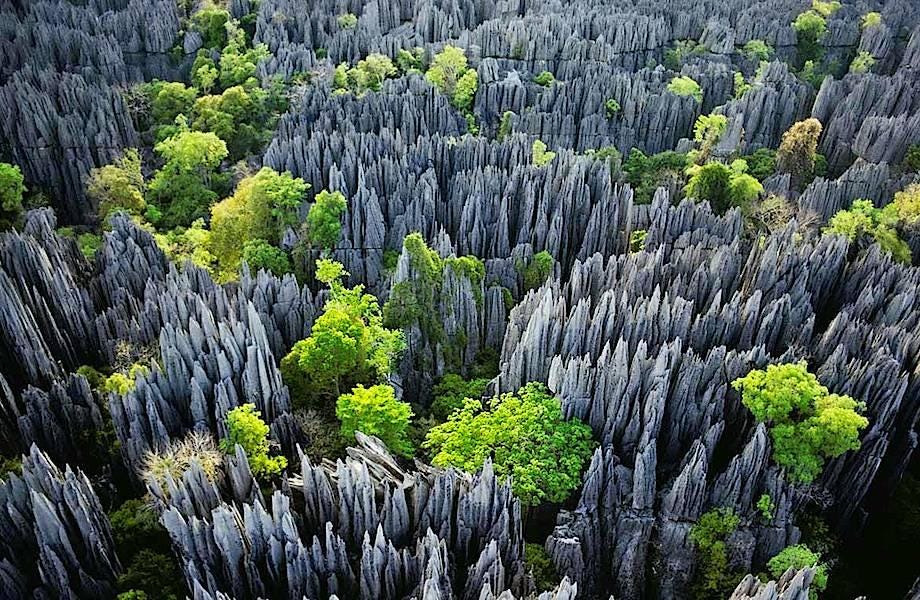
The Tsingy de Bemaraha of Madagascar resembles a landscape from an epic fantasy setting. Its razor-sharp limestone formations challenge conventional assumptions that magical landscapes must be forests.
Fantasy has a geography problem, though many readers and creators rarely notice it because the conventions have become so familiar. For generations, fantasy literature, tabletop roleplaying games, films, and video games have relied upon a relatively narrow collection of landscapes to evoke wonder, mystery, and adventure. Heroes travel through ancient forests filled with towering oaks, druids guard sacred groves hidden beneath mist-covered canopies, and magical beings dwell among woodland kingdoms that seem permanently suspended between history and myth. Knights swear sacred oaths within cathedrals and castles, while pilgrims travel to monasteries perched upon remote mountains. These images have become so deeply embedded within the fantasy imagination that many people unconsciously assume they are the natural language of the genre itself.
The issue is not that these landscapes are uninteresting. Many of them are beautiful, culturally significant, and capable of supporting compelling stories. The problem emerges when they become the default framework through which fantasy is imagined. Over time, forests have become synonymous with mystery, castles have become synonymous with heroism, and cathedrals have become synonymous with sacred power. Fantasy creators often inherit these assumptions from earlier generations of writers and game designers without necessarily examining why certain environments are treated as magical while others are overlooked. As a result, fantasy sometimes mistakes familiarity for universality, recycling the same visual vocabulary rather than exploring the incredible diversity of landscapes that exist across our world.
Beyond Representation
This tendency becomes particularly apparent when discussing African fantasy. Many attempts to diversify fantasy settings focus primarily on the inclusion of African-inspired characters, kingdoms, clothing, or cultural aesthetics while leaving the underlying geography unchanged. The result can be entertaining and even groundbreaking in some respects, but the foundation of the world often remains rooted in landscapes derived from medieval Europe. African people may inhabit the setting, yet the forests, mountains, ruins, and sacred spaces that define its sense of wonder frequently originate elsewhere. Such approaches expand representation, but they do not necessarily challenge the deeper assumptions about where fantasy itself comes from.
A more transformative approach begins by looking at African landscapes themselves. Africa contains some of the most visually extraordinary environments on Earth, many of which appear more fantastical than settings found in popular novels or roleplaying games. Across the continent are pink lakes, forests of razor-sharp stone, active volcanoes filled with molten lava, ancient cities consumed by desert sands, and sacred structures carved directly into mountainsides. These places do not merely provide interesting scenery. They offer entirely different foundations upon which fantasy worlds can be constructed. They invite creators to ask new questions about magic, religion, heroism, ancestry, and humanity’s relationship with the natural world.
Looking for Wonder in the Real World
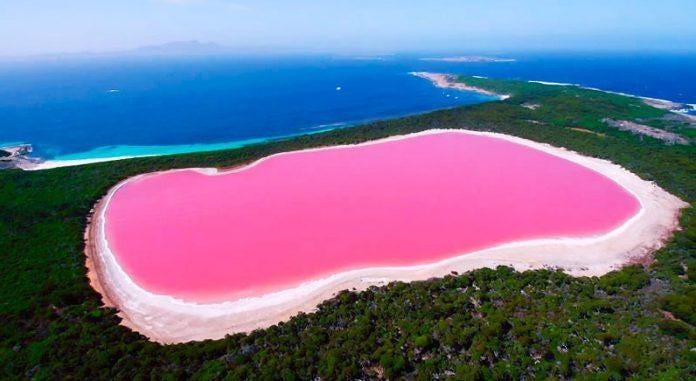
Lake Retba's famous pink waters demonstrate that reality often surpasses fantasy. A landscape like this could easily inspire magical kingdoms, fairy realms, and spirit ecologies.
One of the most valuable habits a worldbuilder can develop is learning to search for wonder in reality rather than exclusively in fantasy media. Many creators begin their projects by drawing inspiration from other fantasy settings, whether consciously or unconsciously. They look at existing novels, films, games, and artwork, then adapt and remix what they find. While there is nothing inherently wrong with this process, it often results in the repetition of familiar ideas. By contrast, the natural world contains landscapes so unusual that they seem impossible at first glance. Geological forces, climatic conditions, and ecological processes have spent millions of years producing environments that challenge our expectations about what the world should look like. When fantasy creators study such places, they gain access to a reservoir of inspiration that is both original and grounded in reality.
This is particularly true when examining Africa’s geography. The continent contains landscapes that seem tailor-made for fantasy worldbuilding. The razor-sharp limestone formations of Madagascar’s Tsingy de Bemaraha resemble the spines of ancient titans. Namibia’s Deadvlei appears frozen between life and death. Senegal’s Lake Retba glows pink beneath the sun. Ethiopia’s Danakil Depression looks more like an alien planet than a terrestrial environment. These places remind us that fantasy does not always require invention. Sometimes fantasy begins with paying closer attention to reality.
The Tyranny of the Forest
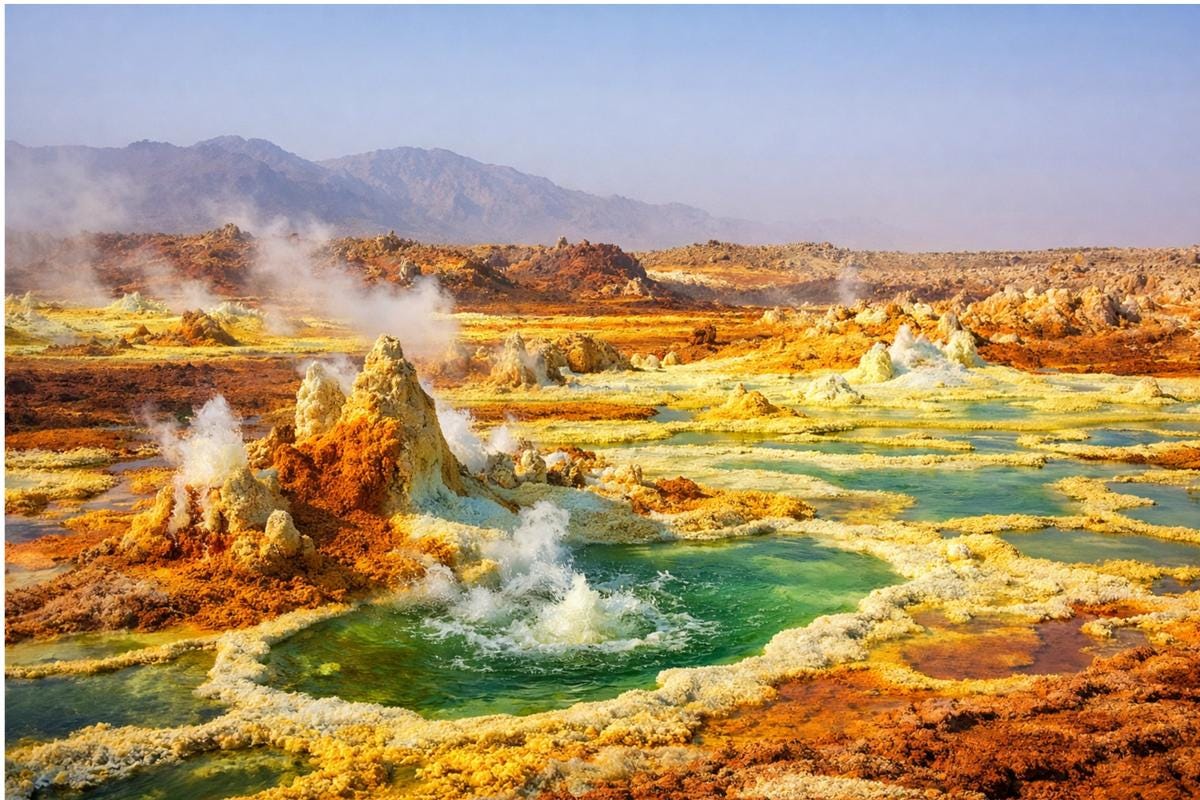
The Danakil Depression challenges assumptions about what a fantasy landscape should look like. Its colors, mineral formations, and geothermal activity resemble another planet.
No fantasy archetype illustrates the limitations of inherited geography more clearly than the druid. Across novels, films, and tabletop games, druids are overwhelmingly associated with forests. Their sacred sites are usually groves of ancient trees, their rituals occur beneath leafy canopies, and their symbolism frequently draws upon romanticized images of Celtic Europe. Over time, this association has become so strong that many players struggle to imagine druids existing within any other environment. Forests have become so thoroughly linked with druidic magic that alternative possibilities are often overlooked.
Yet forests represent only one expression of the natural world. A druid emerging from the stone forests of Madagascar would likely develop very different spiritual traditions from one raised among oak trees. Their understanding of wisdom, age, and resilience might come from observing limestone formations shaped by countless generations of wind and rain. Their sacred stories could focus on erosion, endurance, and geological transformation rather than seasonal cycles within woodland ecosystems. The spirits they commune with might dwell within cliffs, caves, and canyon walls rather than among roots and branches. In such a setting, the druid remains connected to nature, but the nature shaping their worldview is fundamentally different.
Landscapes Create Religions
This principle extends beyond druids and applies to nearly every aspect of fantasy worldbuilding. Religions emerge from landscapes. Mythologies emerge from environments. The places where people live influence how they understand life, death, power, and the sacred. A society that develops around an active volcano will likely produce different stories than one that develops within a temperate forest. Communities that depend upon deserts, rivers, savannas, or coastlines will create distinct relationships with the natural world, and those relationships will inevitably shape their spiritual traditions and cultural identities.
The landscapes featured throughout this series offer compelling examples of how this process might work. Lalibela suggests sacred architecture that is revealed rather than built. Mount Nyiragongo offers a foundation for faiths centered on transformation and renewal. Kolmanskop raises questions about memory, impermanence, and humanity’s relationship with the land. Each location contains the seeds of entirely different religious traditions, clerical orders, and sacred narratives.
A Different Kind of Fantasy
For fantasy creators interested in African-inspired settings, the challenge is therefore not simply adding African elements to existing fantasy frameworks. The challenge is allowing African landscapes themselves to become the source of fantasy. Doing so opens possibilities that extend far beyond conventional worldbuilding. It allows creators to imagine new forms of druidism, new visions of sacred architecture, new spirit worlds, new magical ecologies, and entirely new relationships between people and place.
Throughout this series, we will explore how African landscapes can serve as foundations for fantasy worldbuilding. We will examine how stone forests can transform our understanding of druids, how pink lakes can inspire new Feywilds, how ancient geological formations can become sacred temples, and how volcanic landscapes can shape entirely different visions of paladins and holy warriors. By looking beyond inherited fantasy assumptions, we gain access to an enormous reservoir of inspiration that has too often been overlooked. The goal is not to replace one fantasy tradition with another, but to expand the possibilities of what fantasy can be when it emerges from the extraordinary landscapes of the African continent.